1. Know What Vegan Skincare Means
Why It Matters: Vegan skincare excludes animal-derived ingredients and avoids animal testing, a priority for many consumers.
How to Do It: Familiarize yourself with common animal-based ingredients like beeswax, collagen, and lanolin, and choose plant-based replacements. Confirm with suppliers that no animal testing occurs at any stage.
Tip: Consider certifications like “Certified Vegan” or “Leaping Bunny” to assure customers that your products meet vegan standards.
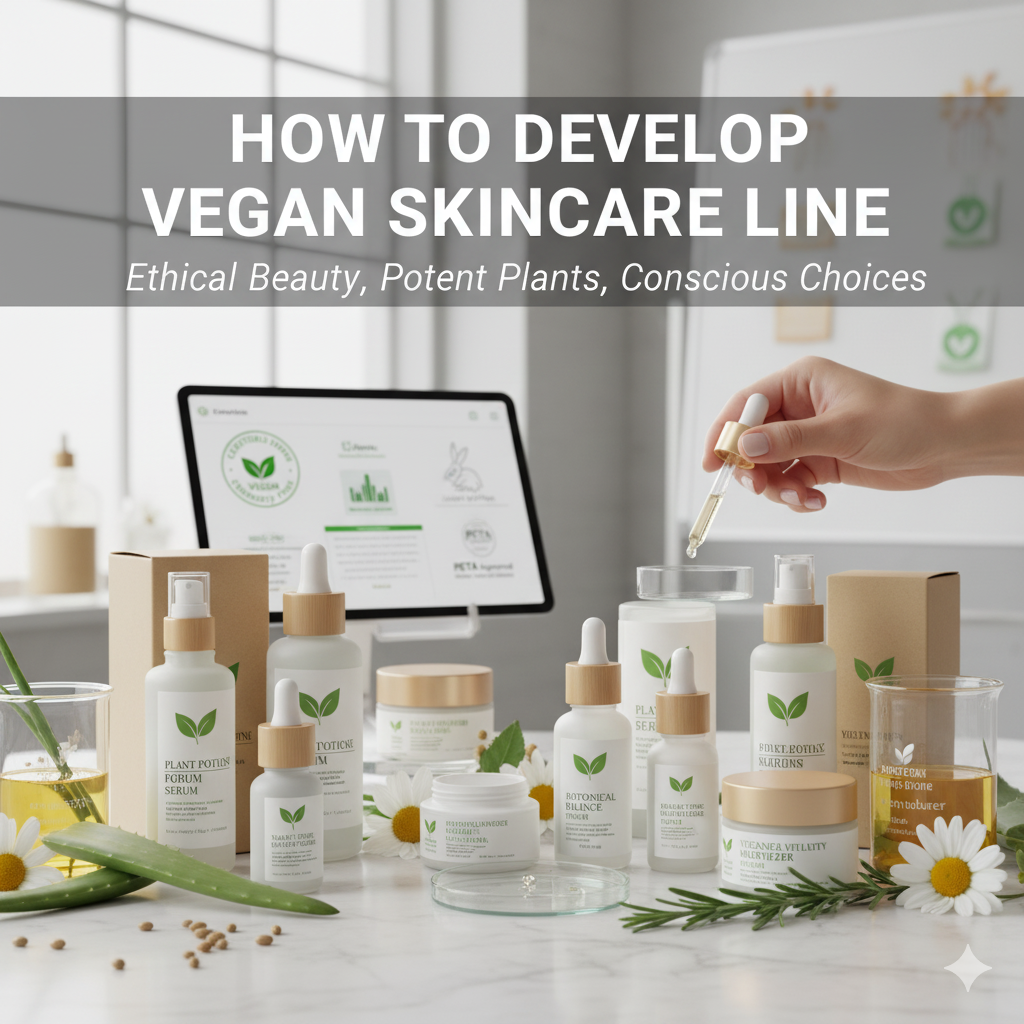
2. Select High-Quality Plant Ingredients
Why It Matters: Quality, plant-based ingredients build customer trust and provide effective skincare benefits.
How to Do It: Use ingredients like aloe vera, jojoba oil, and botanical extracts, which are known to support skin health. Choose olive-derived squalane as a substitute for animal-derived squalene, offering similar hydration benefits.
Tip: Focus on ingredients with proven benefits, like antioxidants and vitamins, that keep skin looking and feeling good.
3. Use Clean and Safe Formulas
Why It Matters: Vegan consumers often prefer “clean” beauty, which minimizes harsh or synthetic chemicals.
How to Do It: Avoid ingredients like parabens, synthetic fragrances, and sulfates. Instead, use natural or safe alternatives that meet both vegan and clean beauty standards.
Tip: List all ingredients on your labels to create transparency and show customers your commitment to clean formulations.
4. Ensure Cruelty-Free Production
Why It Matters: Vegan products should also be cruelty-free, with no animal testing in the process.
How to Do It: Work only with manufacturers who guarantee cruelty-free practices. Seek certification from organizations like Leaping Bunny or PETA to build trust with your customers.
Tip: Clearly display cruelty-free logos on your website and product packaging so customers can easily recognize your commitment.
5. Opt for Eco-Friendly Packaging
Why It Matters: Vegan customers often care about minimizing waste and reducing environmental impact.
How to Do It: Use packaging that is recyclable, biodegradable, or reusable, such as glass jars, recycled plastic, or paper. Offering refillable containers adds an extra layer of sustainability.
Tip: Label your packaging as recyclable or reusable to attract environmentally conscious customers.
6. Partner with Vegan-Certified Manufacturers
Why It Matters: A vegan-certified manufacturer ensures your products remain vegan from start to finish.
How to Do It: Look for manufacturers who specialize in vegan products. Confirm that their sourcing, testing, and production processes align with vegan standards.
Tip: Choosing certified vegan manufacturers builds customer confidence in your brand’s authenticity.
7. Educate Consumers About Vegan Skincare
Why It Matters: Educating customers on vegan skincare encourages them to try your products and builds loyalty.
How to Do It: Share how vegan ingredients support skin health and reduce environmental impact. For instance, explain how plant-based ingredients are rich in natural vitamins and antioxidants.
Tip: Use blog posts, videos, or infographics to explain the benefits of vegan skincare and make it easy for customers to understand.
8. Get Certified as Vegan and Cruelty-Free
Why It Matters: Certifications assure customers that your products meet vegan and cruelty-free standards.
How to Do It: Apply for certifications from organizations like Vegan Action or Leaping Bunny. These groups verify your ingredients and production processes to ensure they meet vegan guidelines.
Tip: Display certification logos on your packaging to show that your products are officially recognized as vegan.
9. Promote Your Vegan Mission
Why It Matters: Clearly communicating your vegan and cruelty-free mission attracts a loyal, conscious audience.
How to Do It: Emphasize vegan values in your product descriptions, social media, and branding. Share your story and commitment to ethical beauty to connect with customers on a deeper level.
Tip: Collaborate with vegan influencers to reach a wider vegan community and boost brand awareness.
10. Build a Community Around Your Brand
Why It Matters: Creating a community increases loyalty and encourages customers to share their experiences.
How to Do It: Engage customers on social media, through newsletters, or on a blog. Share skincare tips, highlight user-generated content like photos and reviews, and encourage customer feedback.
Tip: Use hashtags like #VeganSkincare and #CrueltyFreeBeauty to reach a larger audience interested in ethical beauty.
Key Benefits of a Vegan Skincare Line
Meets Consumer Demand: Vegan skincare is on the rise, aligning with current beauty trends.
Builds Brand Loyalty: A strong vegan mission attracts loyal customers.
Supports Sustainability: Plant-based ingredients and eco-friendly packaging are better for the environment.
Improves Brand Credibility: Certifications from recognized organizations boost trust.
Conclusion: Building a Conscious Vegan Skincare Brand
Creating a vegan skincare line means focusing on ethical sourcing, clean ingredients, and eco-friendly packaging. By staying true to vegan principles and educating customers, you’ll connect with conscious consumers and establish a brand that stands out in the beauty industry. With careful planning, your vegan skincare line can thrive in today’s market.