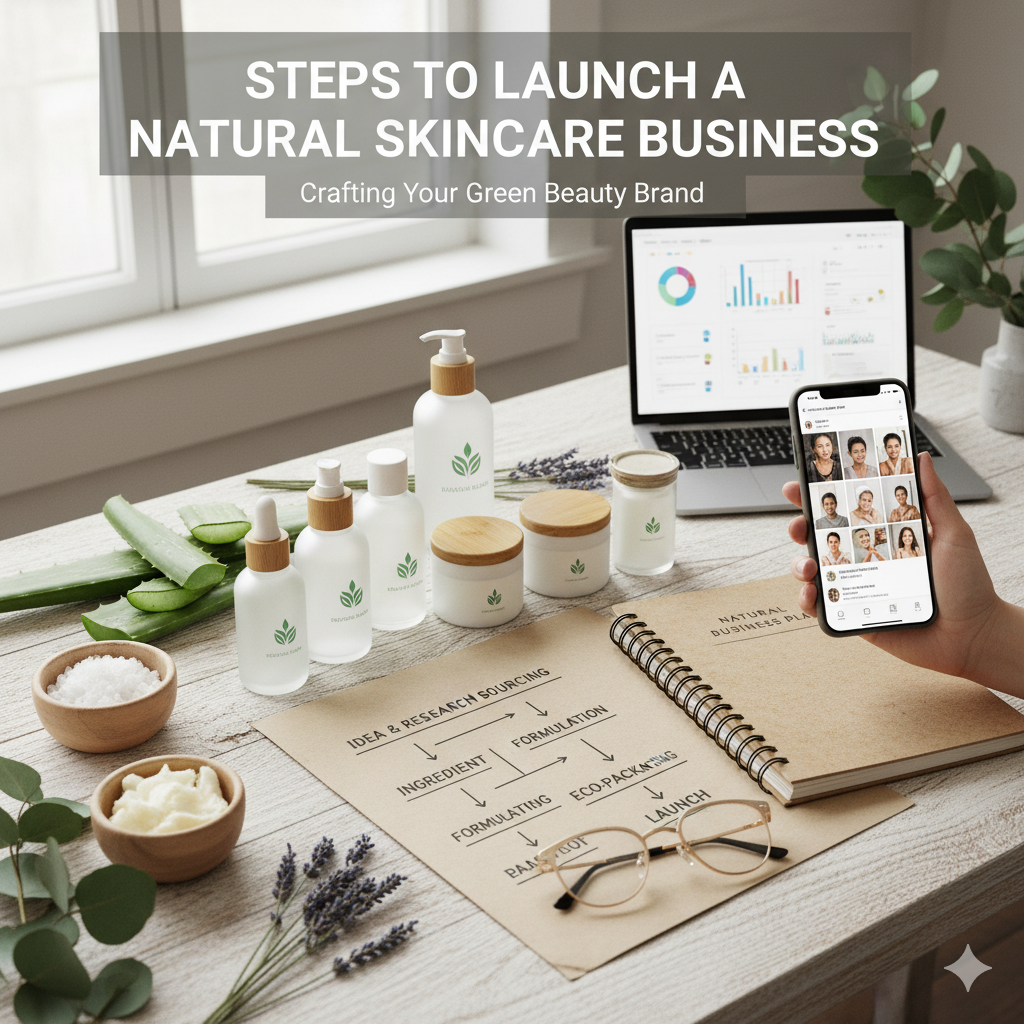
1. Define Your Brand and Mission
Why It Matters: A clear brand mission helps connect with your audience and differentiates you in the natural skincare space.
How to Do It: Decide what makes your brand unique—whether it’s organic ingredients, cruelty-free practices, or eco-friendly packaging. Create a mission statement that reflects these values and guides your brand identity.
Tip: Think about what problem your products solve or how they align with consumer values like sustainability and wellness.
2. Research Your Target Market
Why It Matters: Understanding your audience helps tailor products, marketing, and branding to meet their needs.
How to Do It: Identify the demographics and preferences of your ideal customer. Determine what they look for in natural skincare, such as specific ingredients, ethical sourcing, or environmentally friendly packaging.
Tip: Use surveys, forums, and social media to learn about potential customers’ preferences and values.
3. Formulate Quality Products with Natural Ingredients
Why It Matters: High-quality, effective products establish credibility and attract loyal customers.
How to Do It: Partner with a cosmetic formulator to develop safe, natural formulas. Start with a core line that addresses common skincare needs, like hydration or sensitivity, using clean ingredients like aloe vera, chamomile, and shea butter.
Tip: Source ingredients from reputable suppliers who provide organic or sustainably sourced materials.
4. Focus on Eco-Friendly and Ethical Packaging
Why It Matters: Many consumers of natural skincare prioritize sustainability, so eco-friendly packaging strengthens your brand’s appeal.
How to Do It: Use materials like glass, recyclable plastics, or biodegradable packaging to reduce environmental impact. Avoid excessive packaging and communicate your sustainability practices to customers.
Tip: Emphasize your eco-friendly packaging on your website and product labels to attract environmentally conscious consumers.
5. Test and Ensure Product Safety
Why It Matters: Testing is essential for safety, quality, and compliance with industry standards.
How to Do It: Conduct stability, allergy, and sensitivity tests to ensure your products are safe. This may involve working with labs to confirm that your formulas meet regulatory standards.
Tip: Label products as “hypoallergenic” or “dermatologist-tested” if applicable, providing reassurance to customers.
6. Develop a Memorable Brand Identity
Why It Matters: A cohesive brand identity makes your products recognizable and memorable.
How to Do It: Design a logo, color scheme, and packaging style that align with your brand’s values. Your brand should visually communicate your commitment to natural, clean beauty.
Tip: Use a consistent brand voice across your website, packaging, and social media to build recognition.
7. Set Up an E-commerce Platform
Why It Matters: An online presence is critical for sales, especially for emerging brands.
How to Do It: Choose a reliable e-commerce platform like Shopify or WooCommerce to set up your website. Include detailed product descriptions, high-quality images, and an easy checkout process.
Tip: Add a blog or FAQ section to educate customers about your ingredients and sustainability practices.
8. Leverage Social Media to Build Brand Awareness
Why It Matters: Social media allows you to connect with your audience, share product information, and showcase your brand’s story.
How to Do It: Start with platforms like Instagram and TikTok, where skincare content thrives. Share skincare tips, ingredient highlights, and user-generated content to engage followers.
Tip: Partner with micro-influencers in the natural skincare space for product reviews and reach expansion.

9. Plan Your Launch Strategy
Why It Matters: A well-executed launch attracts attention and establishes your brand in the market.
How to Do It: Create a launch calendar, plan social media posts, and consider special promotions for launch day. Build excitement by offering discounts to early subscribers or hosting a giveaway.
Tip: Use countdowns and teaser posts to create anticipation for your product launch.
10. Gather and Apply Customer Feedback
Why It Matters: Feedback helps you refine products and improve customer satisfaction.
How to Do It: Use reviews, surveys, and direct feedback to learn how your products are received. Adjust formulations or packaging based on constructive input to continually meet customer expectations.
Tip: Showcase positive reviews on your website and social media to build trust with potential customers.
11. Plan for Growth and Expansion
Why It Matters: Expanding your product line or reach helps your brand grow sustainably.
How to Do It: After establishing your core products, consider adding complementary items based on customer demand. Evaluate other channels, such as retail partnerships or expanding to new regions, when ready.
Tip: Stay true to your brand’s values as you grow, ensuring quality and sustainability remain a priority.
Key Benefits of Launching a Natural Skincare Business
Attracts Conscious Consumers: Clean ingredients and ethical practices resonate with a large, growing audience.
Customer Loyalty: High-quality products and transparency build trust and loyalty.
Sustainable Growth: A focus on eco-friendly practices and customer needs fosters long-term growth.
Conclusion: Creating a Natural Skincare Brand for Lasting Success
Launching a natural skincare business requires careful planning, commitment to quality, and transparency with customers. By focusing on ethical ingredients, eco-friendly packaging, and thoughtful branding, you can create a brand that resonates with conscious consumers and stands out in the growing market. Each step ensures a solid foundation for your business, helping you build a lasting presence in the natural skincare industry.